

Here's what we'll cover
Here's what we'll cover
If the idea of a weekly injection makes you hesitate, you're not alone. Needle anxiety is one of the most common reasons people delay starting GLP-1 therapy, even when they meet the criteria and their doctor recommends it. The good news is that the landscape is changing, and there are real options worth knowing about.
But the honest answer is also this: not every "Ozempic alternative" you see advertised actually delivers what it promises. Here's a clear-eyed look at what works, what doesn't, and where the science is heading.
What Makes the "Ozempic Effect" Worth Chasing?
Before comparing alternatives, it helps to understand what people mean when they talk about the Ozempic effect.
Ozempic contains semaglutide, a GLP-1 receptor agonist. GLP-1 (glucagon-like peptide-1) is a hormone your gut naturally releases after eating. It tells your pancreas to release insulin, slows how fast your stomach empties, and signals your brain that you're full.
When you inject semaglutide weekly, you're essentially keeping that "full and satisfied" signal elevated for days at a time. Clinical trials showed participants losing an average of 15% of body weight over 68 weeks on higher doses of semaglutide. That's the effect people are trying to replicate.
Why the Delivery Method Matters
The challenge with replicating this effect without an injection is pharmacological. Semaglutide and other GLP-1 receptor agonists are peptide molecules, meaning they're proteins that get broken down in the digestive tract before they can reach the bloodstream in useful quantities. That's exactly why they were originally developed as injections.
Rybelsus: The Only FDA-Approved Oral GLP-1 Right Now
If you want a pill version of semaglutide today, Rybelsus is the one FDA-approved option. It contains the same active ingredient as Ozempic (semaglutide), just in tablet form taken daily.
Rybelsus uses a specific absorption enhancer called SNAC (sodium N-[8-(2-hydroxybenzoyl) aminocaprylate]) that protects the semaglutide from stomach acid long enough for some of it to absorb through the stomach lining. It's currently approved for type 2 diabetes management, not specifically for weight loss.
How Rybelsus Compares to Ozempic
The trade-off is real. Oral semaglutide bioavailability (the percentage that actually reaches your bloodstream) is roughly 1% compared to injectable semaglutide. That's why Rybelsus requires a much stricter administration protocol and produces more modest effects at currently approved doses.
It's still a meaningful option for people who simply cannot tolerate injections, particularly for blood sugar management. But if weight loss is your primary goal, the gap between oral and injectable semaglutide at current doses is significant.
What's Coming: Oral GLP-1s in the Pipeline
This is where things get genuinely exciting, without overpromising.
Several pharmaceutical companies are developing higher-dose oral GLP-1 options or entirely new oral GLP-1 compounds. Novo Nordisk, the maker of Ozempic and Wegovy, is testing oral semaglutide at doses up to 50 mg per day in trials targeting weight loss specifically.
Early data from the OASIS 1 trial, published in The Lancet, showed that oral semaglutide 50 mg produced approximately 15% body weight reduction over 68 weeks in adults with obesity. That's directly comparable to injectable Wegovy results. The FDA is reviewing this data, and an approval decision for higher-dose oral semaglutide for weight management could come within the next year or two.
Other Oral GLP-1 Candidates
Eli Lilly, which makes Mounjaro, is also working on an oral version of a GIP/GLP-1 receptor agonist (orforglipron), which is a small molecule and doesn't face the same absorption challenges as peptide-based drugs. Phase 3 trial results have been promising, with meaningful weight loss reported.
These oral options aren't available as approved weight-loss treatments yet. But the pipeline is real and moving quickly.
Supplements and "Natural GLP-1 Boosters": What the Science Says
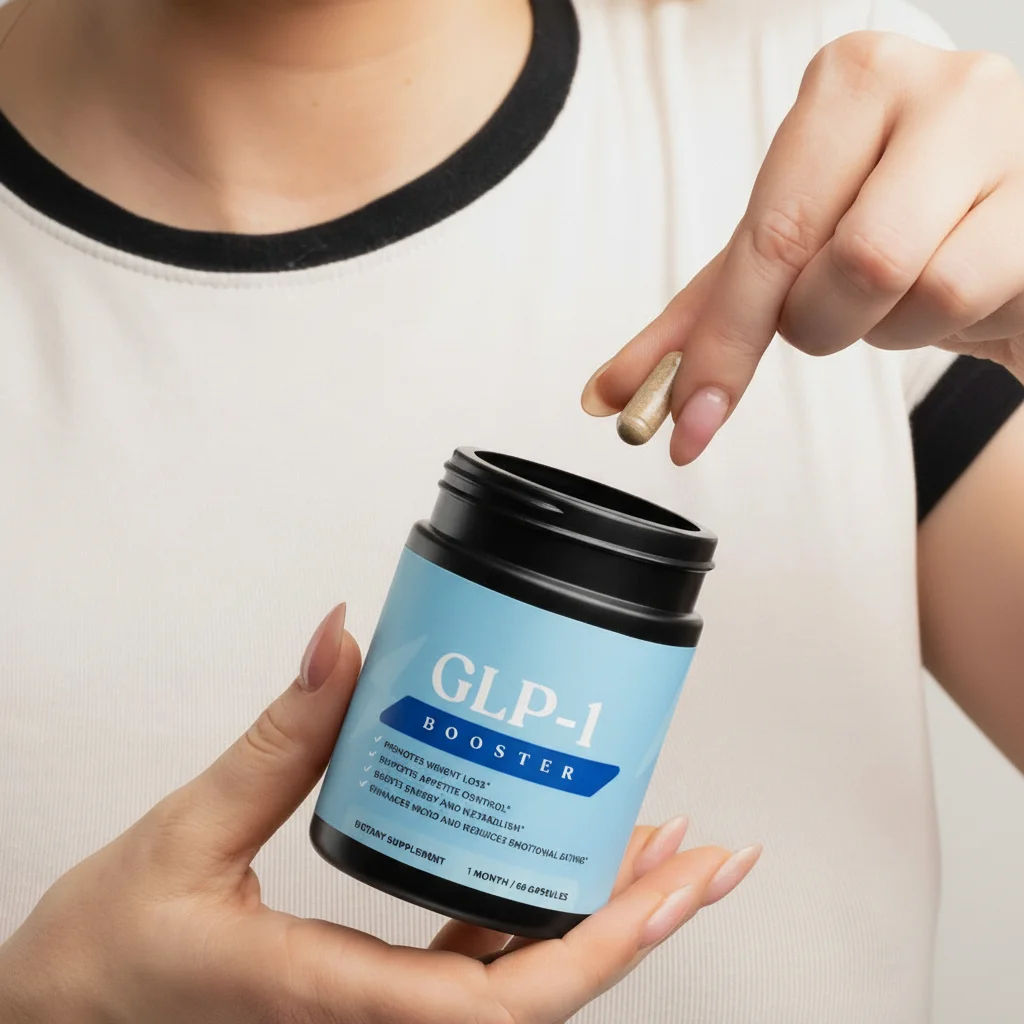
Search "natural Ozempic" online and you'll find a flood of supplements claiming to boost your GLP-1 levels or suppress appetite the way semaglutide does. Most don't hold up under scrutiny.
Here's what the research actually supports, with appropriate context:
Berberine
Berberine is the most frequently cited "natural Ozempic." It's a plant compound that does have some evidence for modest blood sugar improvement and may influence GLP-1 secretion to a minor degree. However, the mechanism is not the same as a GLP-1 receptor agonist, the effect size is far smaller, and the clinical evidence for weight loss is limited and inconsistent. Calling it "nature's Ozempic" is a marketing claim, not a scientific one.
Dietary Fiber
Soluble fiber (found in oats, legumes, apples, and flaxseed) genuinely stimulates your gut to release more natural GLP-1 after meals. This is real physiology. The practical effect on appetite and weight is modest compared to medication, but increasing fiber intake is a well-supported dietary strategy with benefits beyond any GLP-1 connection.
Protein
High-protein meals also stimulate GLP-1 release. Eating adequate protein (roughly 1.2-1.6 grams per kilogram of body weight for people trying to lose weight) supports satiety and helps preserve muscle during weight loss. Again, the magnitude of GLP-1 stimulation from food is much smaller than from medication.
Probiotics and Gut Health
There's emerging research connecting gut microbiome health to GLP-1 secretion. Some probiotic strains may modestly support GLP-1 release. This is an area of active study, but nothing available as a supplement today comes close to replicating what GLP-1 receptor agonists do.
Lifestyle Approaches That Support GLP-1 Pathways
If you're not yet ready for medication, or you're using lifestyle changes alongside medication, certain habits genuinely support the body's own GLP-1 system.
Eating patterns that help
- Prioritize whole foods over ultra-processed options (processing can blunt natural GLP-1 responses)
- Eat slowly, since GLP-1 is released gradually as food reaches the lower gut
- Include protein and fiber at every meal
- Avoid very high-fat, high-sugar meals, which can dysregulate appetite signaling
Exercise
Aerobic exercise has been shown to acutely raise GLP-1 levels during and after activity. Regular physical activity also improves insulin sensitivity, which complements whatever appetite-related benefits natural GLP-1 provides.
None of these strategies replace medication for people with clinical obesity or significant weight-related health conditions. But they're not useless either, especially as a foundation.
When to Talk to a Doctor About Oral Options
If you're interested in Rybelsus as a current option, or you're waiting for oral semaglutide weight-loss approval and want to be ready, here are useful questions to bring to your provider:
- Am I a candidate for Rybelsus based on my health history and goals?
- How does my expected weight loss compare between oral and injectable options?
- Are there any clinical trials I might qualify for?
- If I eventually switch from oral to injectable, what does that transition look like?
- What's the realistic cost difference between oral and injectable GLP-1 options for me?
Speaking with a provider who specializes in GLP-1 therapy gives you the most accurate picture for your specific situation. You can compare providers who prescribe GLP-1 medications to find one that fits your needs.
The Cost Reality of Oral vs. Injectable GLP-1s
Cost is a major factor for many people, and it doesn't always break in the direction you'd expect.
Oral and injectable branded options are similarly priced in the U.S. market. The bigger cost difference often comes from compounded semaglutide, which has been available as an injectable from compounding pharmacies but has faced increasing FDA scrutiny. No compounded oral semaglutide has the same regulatory standing as Rybelsus.
If cost is a barrier, checking available GLP-1 coupons and savings programs is worth doing before assuming these medications are out of reach.

No waiting list. No insurance needed.





Frequently Asked Questions
Is there a GLP-1 pill instead of an injection?
Yes. Rybelsus is an FDA-approved oral semaglutide pill taken once daily and is currently approved for type 2 diabetes. Higher-dose oral semaglutide for weight loss is in late-stage trials, with results comparable to injectable Wegovy, but is not yet approved for that use.
Does berberine really work like Ozempic?
No. Berberine has some modest blood sugar benefits and may slightly increase natural GLP-1 secretion, but it does not work through the same mechanism as semaglutide. The weight loss effects seen in studies are far smaller and less consistent than those from GLP-1 receptor agonists.
How much weight can you lose on Rybelsus compared to Ozempic?
At currently approved doses, Rybelsus produces roughly 4-5% body weight loss, while Ozempic produces around 10-15% in clinical trials. This gap may narrow with higher oral doses currently in development.
Can you take semaglutide in pill form for weight loss right now?
Rybelsus (oral semaglutide) is available now but is only FDA-approved for type 2 diabetes, not weight loss. Some doctors may prescribe it off-label for weight management. A higher-dose oral version specifically for weight loss is currently under FDA review.
What foods naturally boost GLP-1 levels?
Foods high in soluble fiber (oats, legumes, apples) and protein stimulate natural GLP-1 release after meals. The effect is real but modest compared to medication. Eating slowly and choosing whole foods over processed ones also supports your body's natural GLP-1 response.
Is oral semaglutide as safe as injectable semaglutide?
The safety profile of oral semaglutide appears similar to injectable semaglutide in clinical trials, with nausea being the most common side effect. Rybelsus has been used since its 2019 FDA approval with a well-established track record. Your doctor can review your personal health history to assess suitability.
The Bottom Line: Where Are We Now?
If you're genuinely needle-averse, you're not without options, but you do need to be realistic about what those options currently deliver.
Rybelsus is real, available today, and uses the same active ingredient as Ozempic. It's a legitimate choice, particularly if you have type 2 diabetes and can't tolerate injections. The weight loss results at current doses are more modest, but that calculation changes for some people when you weigh it against actually sticking with a treatment long-term.
The supplement market, on the other hand, is full of products that borrow the language of GLP-1 research without the evidence to back it up. Berberine, "natural Ozempic" blends, and appetite-suppressing teas are not the same thing as a prescription GLP-1 receptor agonist. Using them instead of getting proper medical care could delay treatment that genuinely helps you.
Lifestyle changes like increasing protein, fiber, and regular aerobic exercise aren't a replacement for medication when medication is medically appropriate. But they're also not nothing. They support your body's own GLP-1 system and reinforce the results of any treatment approach you take.
The most encouraging part of this conversation is what's coming. Oral GLP-1 therapy for weight loss looks increasingly viable based on current trial data. Within the next year or two, you may have the option of a once-daily pill that delivers results comparable to today's injections.
What to Do Right Now
If you're exploring your options, here's a practical path forward:
- Talk to a provider who is familiar with GLP-1 options, including both oral and injectable forms. A telehealth provider specializing in metabolic health can often do this efficiently. Browse top GLP-1 providers to find one suited to your needs.
- Check your eligibility and costs before assuming medication isn't accessible. Savings programs, manufacturer coupons, and insurance coverage vary significantly. The GLP-1 coupons page is a good starting point.
- Don't let needle fear keep you from a real conversation. Many people who were anxious about injections find the auto-injector pens far less intimidating than expected. Others genuinely prefer pills. Either reaction is valid, and now there's more to discuss with your doctor than there was even two years ago.
- Stay informed. The oral GLP-1 space is moving fast. Checking back at GLP-1.com as approvals develop will help you stay current on what's available and what to ask your provider next.
GLP-1.com is here to help you make sense of a fast-moving field without hype or oversimplification. Whether you're ready to start, still weighing options, or just trying to understand what your choices actually are, you'll find the resources here to take an informed next step.
Always consult your physician or a licensed healthcare provider before starting, stopping, or changing any medication. This article is for informational purposes only and does not constitute medical advice.